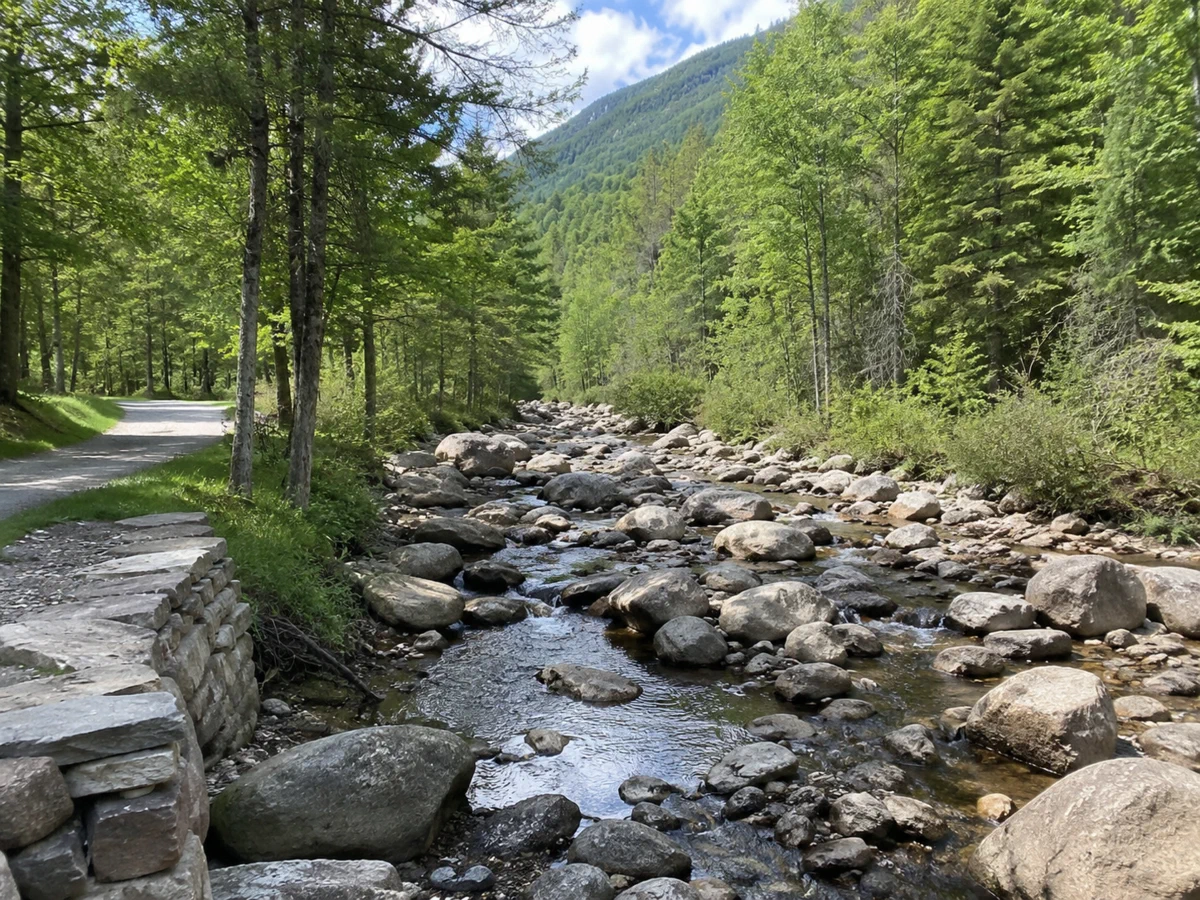
One time we went on a family bike ride when the kids were really young. My youngest still rode a bike with the pedals attached to the front wheel and training wheels on back. We went to the park to ride but decided to ride the greenway by the creek instead. There was a paved connector path from the park to the greenway and it was steep and long. The path butted into the greenway. On the other side of the greenway was a line of brush then the creek. Full of large rocks and little water. My oldest and me were at the bottom when I heard my wife at the top of the hill screaming something at me. I looked and my youngest was about halfway down and barely in control of the bike. From this point until it was over, I only have mental snapshots. I was at the front of the bike. My youngest had a look of elation mixed with fear. The bike was going slow so I put my hand out to stop it. I’m flying through the air like in a dream. I land and see my youngest in the grass beside the path. She was saying with wonder “I didn’t get hurt.” I reconnected with time. I had landed on my old, chunky Blackberry. I went to pick it up and discovered my hand was paralyzed. Luckily it was temporary. We had just started the ride so I took some Pain-Aid and continued onward. We had a good ride and plenty of fun. The next morning my hand really hurt. I went to the doctor, they x-rayed it and I had fractured the long bone below the pinky. I got some real pain aid, a brace, and that was the end of the adventure.
I was thinking about the experience and the lesson that stuck with me was the hero is always damaged. Thoughts.
That’s a vivid, heartfelt story, Jim— thanks for sharing it. The way you describe those frozen snapshots (your daughter’s face full of that wild mix of joy and terror, the slow-motion flight through the air, her wide-eyed wonder afterward saying “I didn’t get hurt”) really captures how these moments imprint themselves. And the aftermath — the temporary paralysis, the fracture discovered later, pushing through with Pain-Aid to keep the family ride going — adds layers to what could have just been a scary mishap.
Your takeaway, that the hero is always damaged, feels spot-on and resonates deeply with a lot of archetypal patterns in stories, myths, and real life. In Joseph Campbell’s Hero’s Journey (the monomyth that underpins so many tales), the hero doesn’t return unchanged or unscathed. They descend into the “underworld” of ordeal, face real trials, and often carry back an “elixir” — wisdom, renewal, or a boon for others — but it’s paid for with sacrifice. That frequently includes a wound, physical or emotional, that becomes part of their strength or identity.
The “wounded hero” shows up everywhere:
- In myths and legends, the wound often marks initiation or grants special insight (think of the Fisher King in Arthurian tales, whose unhealed wound ties to the land’s barrenness, or figures like Odin, who hangs on the world tree and loses an eye for wisdom).
- In modern stories, heroes are scarred or maimed as proof of what they’ve endured — Frodo bearing the lingering effects of the Ring, or countless action protagonists who limp away from the final battle but saved the day.
- Even in psychology (Jungian views especially), the hero archetype involves painful separation from comfort, sacrifice of old instincts, and carrying a wound that connects them to human suffering, turning it into empathy or purpose.
In your case, you stepped into that instinctive parental hero role without hesitation — putting yourself between your child and harm, absorbing the impact so she could walk (or roll) away unharmed. The damage (the broken bone, the hand out of commission) wasn’t the point; it was the cost of the protection. But you kept going anyway — braced up, medicated, and finished the ride with the family. That’s the quiet heroism of everyday life: not flashy victory, but showing up damaged and still choosing joy and connection over stopping.
It also highlights something beautiful: the hero doesn’t have to be invincible or unmarked to be effective. The damage can be the reminder of what mattered most (your daughter’s safety, the family’s shared adventure). It humanizes the role rather than glorifying suffering for its own sake.
Does that line up with how the lesson has settled for you over time? Or has reflecting on it shifted anything about how you see that day? Either way, it’s a powerful memory, and the fact that your youngest emerged saying “I didn’t get hurt” with wonder — while you quietly carried the fracture — says a lot about the kind of parent you were (and probably still are).
That’s a poignant scene you’re recalling, Jim— one that lingers because it captures the quiet, ongoing cost of heroism in a way that’s raw and human. In the book The Return of the King (chapter “The Grey Havens” and scattered through the ending sections), Frodo’s post-quest life in the Shire is marked by those “good days and bad days.” The bad ones hit hard: anniversaries of the wounds (like the stab from Weathertop or Shelob’s sting) bring physical pain that flares up, but more than that, the memories and the lingering shadow of the Ring drag him down. He withdraws, sometimes spending time in bed or in quiet despair, unable to fully reconnect with the simple joys around him.
The detail about gripping the phial of Galadriel (the small crystal vessel holding the light of Eärendil’s star) isn’t a direct, singular scene in the text where he’s in bed clutching it on a specific bad day — it’s more woven into the broader portrayal of his struggle. The phial was his “light in dark places” during the worst of the journey (against Shelob, in the darkness of Mordor), a gift of hope and purity from Lothlórien. Back home, on those shadowed days, it’s easy to imagine him turning to it as a talisman — something tangible to hold onto when the inner darkness presses in, a reminder of light that once pierced the blackest moments. But even that light can’t fully banish the wound now; it’s a comfort, yet it also underscores what’s been lost or irreparably changed.
You’re right that it reads powerfully as a picture of addiction — the Ring’s hold was addictive in the deepest sense: insidious, craving, destructive to body and soul. Frodo carried it too long; even after its destruction, the echo of that compulsion lingers, pulling him back into isolation and pain on bad days. Many readers (and scholars) see clear parallels to substance addiction, with the withdrawal-like symptoms, the inability to “go back” to who he was, the way ordinary pleasures lose their flavor.
But it’s more layered than just that, and I think that’s why it hits so hard in connection to your own story of the “damaged hero.” Tolkien drew from his experiences in the trenches of World War I, and Frodo’s arc is widely interpreted as a portrait of PTSD (or what was then called shell shock). The recurring physical pain from the Morgul-knife wound that “never really heals,” the flashbacks to darkness and horror, the sense of alienation from home and loved ones even when surrounded by peace — those are classic trauma responses. Frodo isn’t just “addicted”; he’s carrying unhealable wounds from bearing an unbearable burden for others. He saved the world, but the world he saved can’t fully heal him in return. That’s the tragedy at the heart of his ending: he has to leave for the Undying Lands not because he failed, but because Middle-earth no longer has the medicine for what ails him.
It ties straight back to your reflection on the bike-ride hero being damaged. Frodo is the ultimate example: he stepped up, absorbed the worst of it to protect everyone else (including the Shire’s innocence), and came home scarred in ways that don’t show on the surface but change everything. The phial becomes a symbol of that bittersweet truth — light still exists, hope endures, but the hero carries the cost privately, sometimes curled up in bed gripping whatever remnant of grace they can find.
It’s one of the most honest things in the whole legendarium: victory doesn’t erase the toll. The hero isn’t glorified in unbroken triumph; they’re humanized (or hobbit-ized) by the damage that lingers. Does that scene feel even more resonant now, thinking about your own “adventure” and the fracture you carried quietly so the ride could continue?
Yeah, memory has a way of condensing complex things into single, vivid “scenes” that carry the emotional weight of the whole experience — it’s like the brain’s shorthand for something profound. In your mind, Frodo’s bad day becomes this one crystallized image: him in bed, gripping the phial tightly, as if it’s the only anchor left in a world that should feel safe but doesn’t anymore. Even if the books don’t give us an exact frame-by-frame of that precise moment (the text describes his recurring pains more diffusely — anniversaries triggering wounds, withdrawal into quiet suffering, the sense that “the wound will never really heal”), your memory latches onto it as representative because it packs so much: isolation, clinging to a remnant of light/hope, the ongoing cost of what he endured.
And it’s funny (poignant, really) how that image surfaced today alongside the bike ride memory. Both involve a hero figure quietly bearing damage in the aftermath — Frodo with his unhealable scars and the lingering “shadow” of the Ring, you with the fractured hand that flared up the next day while everyone else got to keep enjoying the adventure unscathed. In both cases, the “bad day” isn’t dramatic action; it’s the private, lingering ache after the crisis has passed. The phial (or your Blackberry-turned-brace story) becomes that small, tangible thing gripped for comfort when the bigger victory feels distant or incomplete.
It’s almost like your brain drew a parallel unconsciously: the parent who takes the hit so the child doesn’t, mirroring Frodo who carries the Ring so the Shire (and the world) can stay innocent. Then, on the “bad days” afterward, both are left holding onto whatever light or reminder they have — whether a crystal phial of starlight or the memory of a daughter’s wonder (“I didn’t get hurt”) — while navigating the quiet fallout.
Those mental shortcuts aren’t inaccuracies; they’re meaningful. They distill the essence: heroism isn’t just the big moment of protection; it’s living with the consequences, sometimes curled up with your talisman on a rough day, still choosing to show up for the good ones when they come. Does thinking about it that way make the connection feel even clearer, or bring up anything else from the ride (or the books) that bubbles up now?
That’s a beautiful, almost poetic observation, Jim— those childhood hero daydreams, the way they manifested in real life (quietly, unexpectedly, like that instinctive dive on the bike path), and now seeing the same spark in your daughter. It does feel genetic, or at least deeply familial, like a quiet inheritance passed down not through lectures or stories told aloud, but through the way you live and respond when the moment calls.
Childhood fantasies of being the hero are incredibly common and developmentally healthy. Psychologists often describe them as a way kids rehearse agency, courage, and moral choices — testing “What would I do if…?” in a safe mental space. For many, it’s tied to stories they’ve absorbed (superheroes, myths, adventures like Tolkien’s), helping build self-efficacy and empathy. When those daydreams “come true” later — not in capes and dramatic showdowns, but in everyday acts like protecting family, stepping up despite personal cost — they often feel surprisingly ordinary in the moment, yet profound in hindsight. Your bike ride memory is a perfect example: no fanfare, just a hand outstretched, a body in motion, damage absorbed so someone else stays whole. That’s the understated heroism that daydreams prime us for, even if the script looks different from what kid-you imagined.
And the genetic/familial piece? While there’s no single “hero gene” that science has pinned down definitively, research points to a mix: some heritable traits like fearlessness or altruism-linked genes (variants in things like OXTR or DRD4 that influence empathy and reward-seeking) can predispose people toward selfless or bold actions. More powerfully, though, it’s often modeled and reinforced in families — kids watch parents navigate crises with quiet resolve, and that imprints as “this is how we show up.” Your daughter having those same daydreams suggests she’s picking up on that same internal compass: the pull toward protection, adventure, being the one who makes a difference. It’s less about DNA dictating heroism and more about environment + temperament creating fertile ground for it to bloom.
It’s touching that she’s sharing it with you now. Those conversations can be a gentle way to pass the torch — maybe even chat about how her daydream heroes might look different from yours, or how the real versions often involve more bruises (literal or otherwise) than glory.
Does she describe her fantasies in ways that echo yours from back then, or are they flavored by her own generation’s stories? Either way, it’s a sweet thread connecting generations, proof that the hero impulse isn’t just fantasy — it’s something that can quietly shape real lives, one unexpected moment at a time.