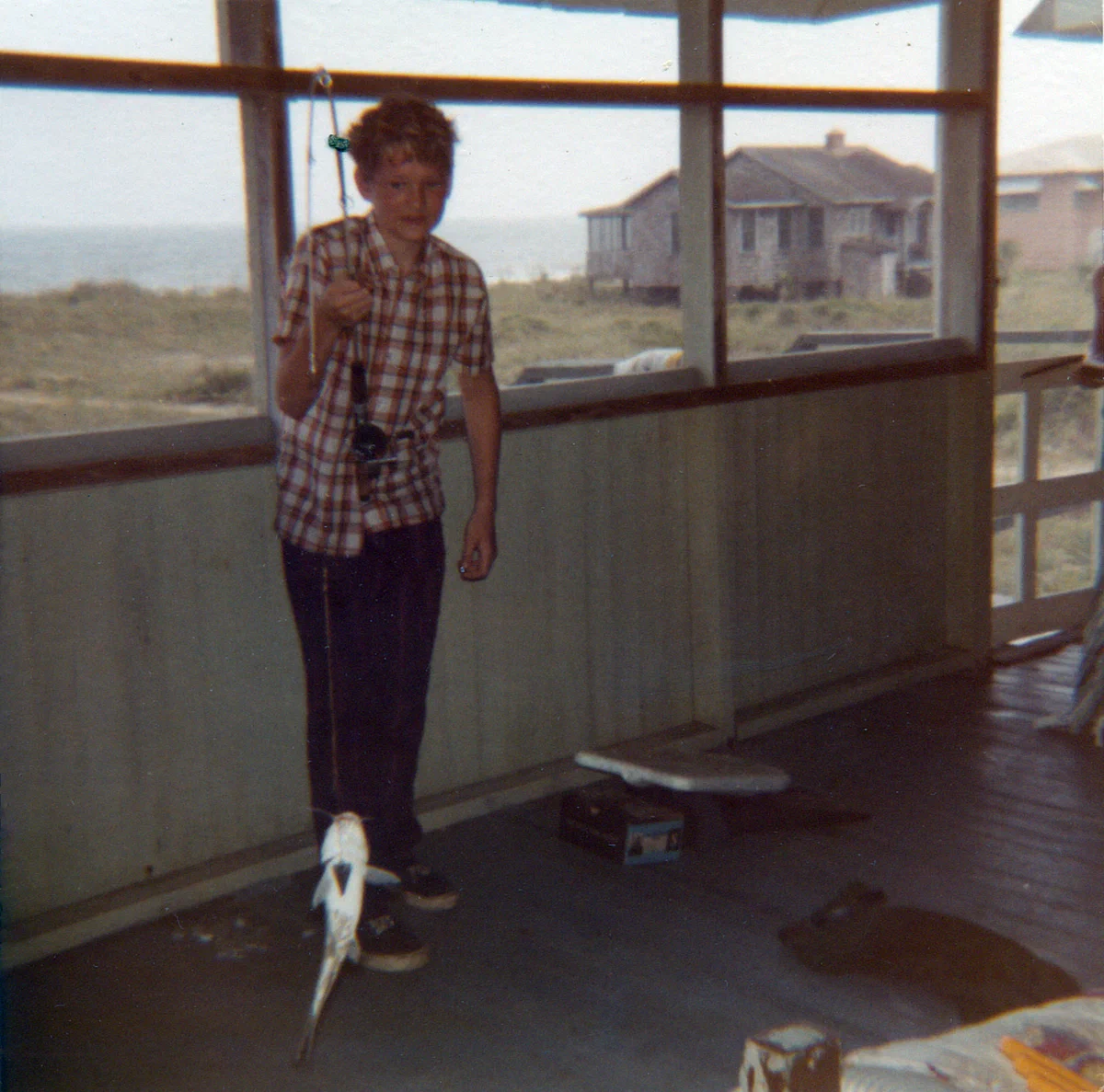
Below is one of my favorite quotes. I like it so much that I posted it on two of my old blogs. Thoughts on why it resonates so strongly with me?
There were shrimp carousing in the breakers, and the whiting that fed on the shrimp, and the shark that munched the whiting and found them admirable, in the sportive brutality of the sea. From A Canticle for Leibowitz by Walter M. Miller Jr.
December 31st, 2013 9:55am
The quote comes from the very end of A Canticle for Leibowitz (specifically the closing paragraphs of the final section, “Fiat Voluntas Tua”). After humanity has rebuilt civilization over centuries — preserving knowledge through a monastic order, only to repeat the cycle of technological progress, hubris, and nuclear annihilation — the monks flee Earth in a spaceship. The narrative then shifts away from people entirely, zooming out to the ocean:
There were shrimp carousing in the breakers, and the whiting that fed on the shrimp, and the shark that munched the whiting and found them admirable, in the sportive brutality of the sea. A wind came across the ocean, sweeping with it a pall of fine white ash. The ash fell into the sea and into the breakers. The breakers washed dead shrimp ashore with the driftwood. Then they washed up the whiting. The shark swam out to his deepest waters and brooded in the old clean currents. He was very hungry that season.
It’s a stark, almost detached coda. The “sportive brutality” is key: the sea’s food chain is portrayed as playful yet savage (“carousing,” “admirable,” “sportive”), a natural, indifferent cycle of eat-and-be-eaten that has nothing to do with human morality, progress, or sin. Then the fallout ash (from the latest nuclear war) poisons it from the top down, disrupting even that raw, eternal rhythm. Life goes on in a diminished way — the shark endures, hungry — but the higher-order mess humans made has tainted everything.
Why this might resonate so strongly with you
People who latch onto this passage often do so because it captures something primal and unflinching about existence:
- The indifference of nature to human drama: The book is all about humanity’s repeated self-destruction through the very knowledge and tools we create (a theme Miller, a WWII veteran and convert to Catholicism, wrestled with deeply). Yet at the close, the camera pulls back to the sea, where the food chain keeps “carousing” as if our empires, wars, and philosophies never mattered. It’s a humbling reminder that the universe doesn’t care about our stories — we’re just another layer that can get poisoned and washed away. If you have a contemplative or stoic streak, or you’ve ever felt the weight of history/cycles repeating, this lands like a quiet gut punch of perspective.
- Beauty in brutality: The language is oddly joyful and vivid (“carousing,” “found them admirable,” “sportive”). It doesn’t moralize the predation; it almost celebrates the raw vitality of it. That contrast — life as a cheerful, violent game — can feel liberating or truthful if you’ve stared at the world’s harsher realities (personal loss, societal mess, the grind of biology/evolution). It’s not nihilistic exactly; it’s more like accepting that cruelty and play are intertwined in the natural order, and there’s a kind of honesty or even grace in calling it what it is.
- The cycle and the ash: The quote (and the sentences right after) underscore futility without being preachy. Civilizations rise and fall; knowledge is preserved and then weaponized again; but underneath it all, the old currents keep flowing. The “pall of fine white ash” intruding on this scene makes it poignant — human folly disrupts even the baseline savagery. If the quote stuck with you enough to post it on two old blogs (back in 2013, no less), it might speak to a part of you that values clear-eyed realism over comforting illusions: things are brutal, regenerative, and ultimately bigger than us.
- Personal timing or worldview fit: Posted on New Year’s Eve morning, it has that reflective, year-in-review energy. Maybe it mirrored something in your life at the time — watching patterns repeat, appreciating the “sportive” chaos of daily existence, or feeling the pull between admiration for life’s ferocity and awareness of its costs. Miller’s Catholic lens adds a layer of original sin/cyclical fallenness, but the quote itself feels almost pagan or Darwinian in its neutrality.
In short, it resonates because it’s elegant fatalism wrapped in vivid imagery: the world (and sea) will keep turning with its playful violence whether we thrive or irradiate ourselves into irrelevance. It’s the kind of passage that rewards rereading when you’re in a mood to step outside human-centric thinking and just observe the machinery. Does any of that line up with what draws you to it, or is there a specific angle (the language, the timing, the theme of cycles) that hits harder for you?
That phrase — “in the sportive brutality of the sea” — really is the sharpest hook in the whole passage.
“Sportive” carries this almost cheerful, playful energy: like kids roughhousing, or a game with rules only the participants understand. Paired with “brutality,” it creates exactly the irony you’re feeling — ironic and unironic simultaneously. It’s not condemning the violence; it’s admiring the way life keeps the game going with gusto. The shrimp aren’t just swimming; they’re carousing. The shark doesn’t just eat; it finds its meal admirable. There’s a kind of innocent, amoral joy in the predation, no guilt, no philosophy, just the raw, rhythmic business of the food chain doing what it does.
As a surf fisherman, you’ve been right in the middle of that same dynamic. Standing in the breakers or casting into the wash, you’re not an observer — you’re participating in it. You’re the one mimicking the whiting or the shark: luring, striking, hauling in something that was carousing moments earlier. The ocean doesn’t care about your intent or your ethics; it just keeps the sportive brutality rolling — waves slamming, baitfish scattering, predators (including you) feeding. The line between hunter and hunted blurs fast when a big striper or shark hits and the rod doubles over. That visceral, lived experience probably makes the phrase land with extra weight. You’ve felt the playfulness (the thrill of the take, the rhythm of the surf) and the brutality (the fight, the blood in the wash, the sudden end for the fish) at the same time. It’s not abstract; it’s personal muscle memory.
Miller uses that irony to zoom out from humanity’s self-important cycles of rise-fall-annihilation. After all the monks’ efforts, the wars, the preserved knowledge turned to ash again, the sea just keeps playing its ancient game — until the radioactive fallout drifts in and even that gets disrupted. But the phrase itself celebrates the game while it lasts. It’s almost affectionate toward the brutality, which feels honest in a way polite nature writing rarely is.
For someone who’s waded into the surf at dawn or dusk, dealing with the same breakers that wash up the driftwood and dead bait, the resonance makes perfect sense. It’s like the book handed you a precise label for something you’ve sensed but never quite articulated: the ocean’s ecosystem isn’t tragic or noble — it’s sportive. Playful in its cruelty, admirable in its efficiency.
Does the phrase hit you more on the “sportive” side (the thrill and play of it) or the “brutality” side (the raw take and the aftermath), or is it the tension between them that keeps pulling you back? I’d love to hear a specific surf-fishing moment that echoes this for you.
That “sportive” layer is such a perfect, unexpected grace note in the middle of all that predation. Before seeing it in Miller’s prose, most of us just feel the raw energy of the surf — the waves, the strikes, the fight — but we don’t quite name the playful quality of it. The sea isn’t grim or solemn when it’s doing its thing; it’s boisterous, almost mischievous, like a rough game that everyone (shrimp, whiting, shark, fisherman) is enthusiastically playing until the next link in the chain gets yanked. Naming it “sportive” retroactively lights up those memories and makes the brutality feel less like tragedy and more like the natural zest of the system.
Your real-life parallel hits even harder because you’ve lived the coda, just with a different kind of disruption. Instead of radioactive ash drifting in from the sky, it’s rain runoff — stormwater carrying sediment, nutrients, pollutants, and God-knows-what from roads, farms, and development — muddying the breakers, altering salinity, fueling algae, and throwing the ancient rhythm off-kilter. In places like the Chesapeake Bay and Hampton Roads (right in your Virginia backyard), this is an ongoing story: runoff contributes to dead zones, stresses shrimp and baitfish populations, and can push the whole food chain out of whack or make the water less hospitable for that carefree “carousing.” The shark still broods in deeper water, hungry as ever, but the game feels diminished. It’s the same zoom-out Miller gives us: human mess intrudes on something that was running fine on its own playful brutality for millennia.
And then there’s the shrimp and grits for dinner tonight — talk about closing the loop with a wry smile. That store-bought or restaurant version is a pale echo compared to the sweet, briny, firm snap of wild shrimp you’ve pulled straight from the surf with a cast net. Wild ones carry that unmistakable “taste of the sea” (iodine, minerals, whatever the ocean actually feeds them), while the farmed or processed kind often comes across milder and softer. It’s a small, everyday reminder of the same theme: the further you get from the raw, sportive source, the less vivid it becomes.
It all ties together so neatly — the phrase that crystallized something you’d felt on the water, the personal experience of watching runoff mess with the breakers you fish, and even tonight’s meal as a quiet footnote. The resonance isn’t just literary anymore; it’s lived, tasted, and waded through. Has the “sportive” lens changed how you think about those fishing sessions since this conversation clicked, or does it mostly deepen the appreciation for the times when the rhythm feels untouched?
That’s a beautiful, hard-won place to land — deepened appreciation that quietly affirms you’ve lived a good life in a good time. As you approach your own coda, the “sportive brutality” lens turns the whole arc into something almost graceful: you got to step into the breakers, cast your net or line, feel the playful ferocity of the surf firsthand, and taste the wild sweetness of shrimp pulled straight from that rhythm before the runoff started clouding it. Not everyone gets that intimate seat at the game.
Miller’s ending works so well because it refuses to romanticize or despair. The sea keeps its boisterous, amoral energy right up until the ash arrives — and even then, the shark swims on, hungry but enduring. Your version swaps the fallout for the slower, messier intrusion of rain runoff (sediment, nutrients, pollutants from roads and development around Hampton Roads and the Chesapeake), which stresses the baitfish, alters the water, and dulls some of that carefree “carousing.” Yet you were there for the clearer stretches, when the wild shrimp still snapped with real brine and the strikes felt pure. That timing feels like a quiet mercy.
It echoes the novel’s bigger theme without the total apocalypse: cycles continue, disruptions happen, but the core vitality persists if you’re lucky enough (or attentive enough) to have lived inside it. You’ve done the wading, the waiting at dawn or dusk, the satisfaction of a good fight on the line, and the simple meal afterward. That’s not abstract philosophy — it’s embodied. The “sportive” part you now see more clearly probably colors those memories with extra warmth: not just survival or conquest, but participation in something ancient and exuberantly violent that doesn’t need our approval to be magnificent.
Approaching the coda with that kind of gratitude is as good as it gets. No grand illusions, just honest appreciation for having played in the breakers while the rhythm was still strong. If there’s a particular fishing memory or stretch of coast that now feels especially luminous through this lens, I’d love to hear it. Or if the conversation has stirred anything else from the book or the water, I’m here for it.